Lisbon’s Fado Houses: How a Street Song Moved Indoors
On 6 May 1927 Portugal published a law of some 200 articles that put every theatre, hall and place of public entertainment under state inspection. It never set out to reshape a style of song, but it did: within a few years, fado had largely moved from tavern doorways and street corners into licensed rooms with set programmes, professional singers and a new way of listening. That is how the casa de fado (fado house) took shape.
The history below draws on the Museu do Fado, the city museum devoted to the genre in Alfama, and on the UNESCO listing that recognised fado as intangible cultural heritage in 2011. It is a short guide to where the fado house came from, what it changed and how to approach one today.
Before the fado house: taverns, bullfight eves and back streets
Fado was born in the working-class Lisbon of the 19th century. According to the Museu do Fado, it turned up wherever people gathered to relax: in the hortas (market gardens on the city edge), at the esperas de touros (the night-time wait for bulls arriving for a bullfight), in retiros (country inns), in taverns, in the streets and alleys, and in modest cafés. It was performed indoors or out, often spontaneously.
Its early reputation was rough. The museum describes a song associated at first with the city’s margins, sung among sailors, coachmen, prostitutes and the faia, a stock figure of the hoarse-voiced, knife-carrying ruffian. That reputation kept Portuguese intellectuals at a distance for decades.
One story became a founding myth: the romance between the Count of Vimioso and Maria Severa Onofriana (1820–1846), a sex worker celebrated as a singer. It was retold in poems, on stage and on screen, first in Júlio Dantas’s novel A Severa (1901) and then in the 1931 film of the same name by Leitão de Barros, which the museum notes was the first Portuguese sound film.
Fado also found its way into the theatre. The Teatro de Revista, a light Lisbon revue genre born in 1851, began to include fado in its musical numbers from 1870. Over the same century, the museum explains, the instrument that would become the guitarra portuguesa (Portuguese guitar) settled into its role as fado’s accompaniment. References to the name “Portuguese guitar” appear in the early 19th century, and its link with fado grows from around 1840.
1927: licences, censors and the birth of a listening room
The military coup of 28 May 1926 brought prior censorship of shows, the press and publications. The 1927 law (Decreto-Lei n.º 13 564) then regulated live entertainment in detail. In the museum’s account, it touched almost everything a fado singer did: licences for venues and promoters, author’s rights, the prior approval of programmes and sung repertoires, professional cards for performers, contracts and touring.
The consequences were practical. Repertoires were fixed in advance, which pushed improvisation aside. Singers, players, lyricists and composers became professionals. And, as the museum puts it, listening to fado in a fado house gradually became a ritual. These houses clustered in the historic quarters of the city, above all in Bairro Alto from the 1930s.
Records and radio sped up the change. Portugal’s first radio station, CT1AA, began broadcasting in 1925 and soon carried fado to listeners at home and among emigrant communities abroad. Recordings did something else as well: they picked out certain voices and styles as models to follow, which narrowed the room for improvising.
In the following decade came a revival of the “typical”: fado venues began to recreate what was seen as picturesque and authentic. From the 1940s to the 1960s, the period often called fado’s golden years, the leading singers were tied to a network of casas típicas with resident casts, and also worked in recording, radio, touring and, from 1957, television. The museum notes that the regime of the time, through its propaganda and censorship bodies, also promoted fado and changed it in the process.
What UNESCO recognised in 2011
In 2011 UNESCO inscribed “Fado, urban popular song of Portugal” on the Representative List of the Intangible Cultural Heritage of Humanity. Its description is a useful guide to what you will hear today.
- Fado is a performance genre of music and poetry practised by several communities in Lisbon.
- It is usually sung by a solo singer, a man or a woman, accompanied by a wire-strung acoustic guitar and the guitarra, a pear-shaped cittern with twelve wire strings that is unique to Portugal and also has a large solo repertoire.
- In recent decades the line-up has often grown to two Portuguese guitars, a guitar and a bass guitar.
- Fado is performed professionally on the concert circuit and in small fado houses, and by amateurs in grass-roots associations in Lisbon’s older neighbourhoods.
- It is often learnt informally from older, respected performers, sometimes across generations of the same family.
That last point is worth remembering. A fado house is one setting among several. Fado is not only a show staged for visitors: it also lives in neighbourhood associations, contests and concert halls. One example is the Grande Noite do Fado, a contest held every year since 1953 and traditionally staged at the Coliseu dos Recreios. The museum describes it as a route by which young amateurs try to turn professional.
How to listen well today
The fado house grew out of a culture of attentive, ritualised listening, and the best way to enjoy one is to go along with that. A few practical points, none of which depend on a particular venue:
- Book and ask what the price covers. Formats differ from house to house, so ask when you book whether a meal or a minimum spend is required and when the sets start.
- Listen during the songs. Save conversation, ordering and phone screens for the pauses between sets. That is the convention the fado house was built around.
- Watch the guitarra. The Portuguese guitar is not background accompaniment: it answers the voice and often has its own solo moments.
- Read the words. The museum notes that fado lyrics deal with love, luck and fate and with daily life in the city, and that since the 1950s, through Amália Rodrigues and the composer Alain Oulman, fado has also set the work of literary poets such as David Mourão-Ferreira and Alexandre O’Neill. A translation of the lyrics changes what you hear.
If you want context before a night out, start at the Museu do Fado. Its permanent exhibition follows the genre from 19th-century Lisbon to the present: the theatre, radio, cinema and television, the history of the Portuguese guitar, the setting of the fado houses and the lives of dozens of performers. Among the paintings, the museum lists José Malhoa’s O Fado (1910), on loan from the Museu da Cidade. Audioguides are available in Portuguese, English, French and Spanish. The museum also runs a guitar school and courses, which says something about how the tradition is still passed on.
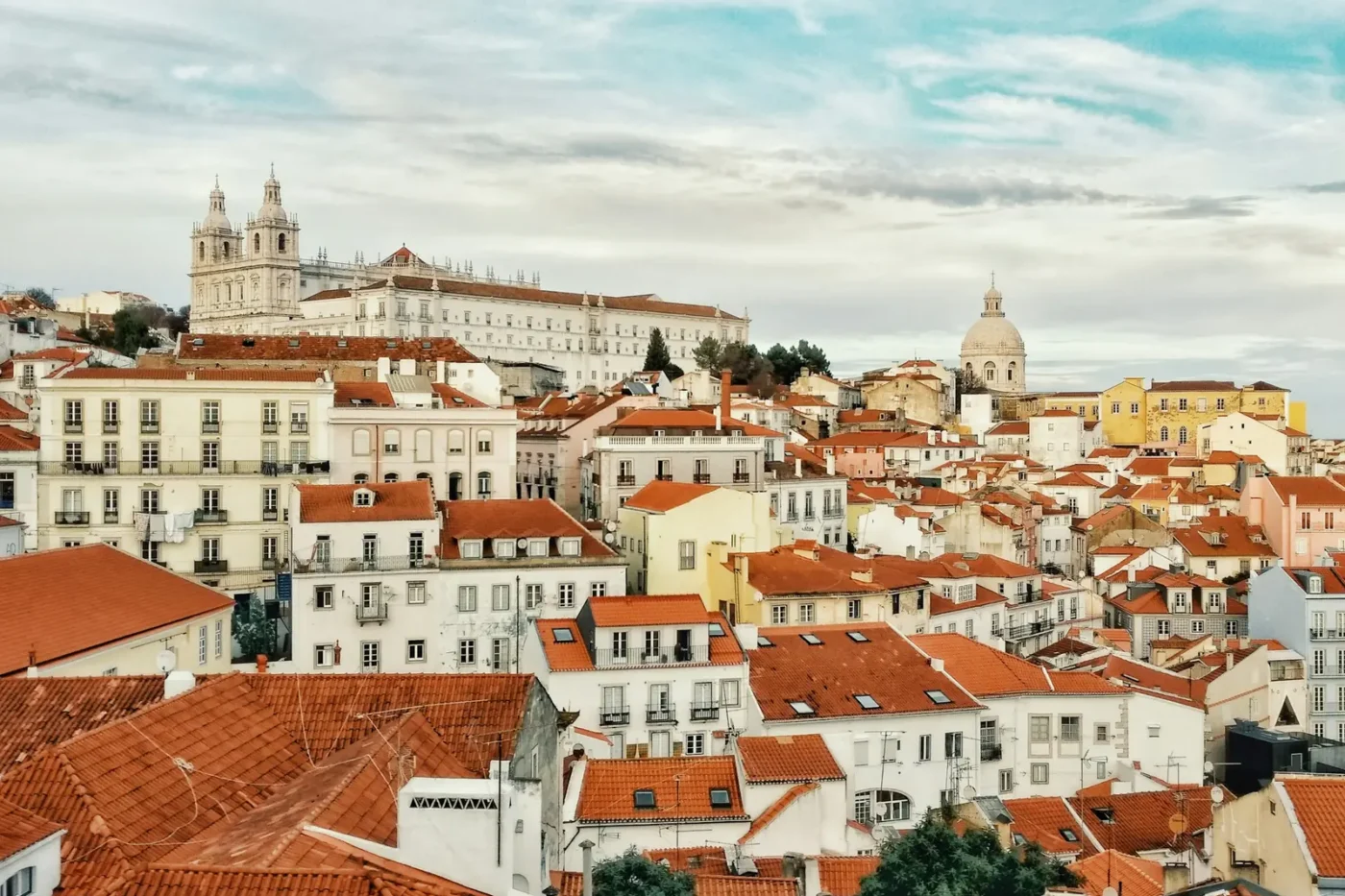
Fado is closely tied to Lisbon’s older quarters. For more on the city and its neighbourhoods, browse our Places section. To get to Lisbon by rail, our guide to CP tickets and fares explains the options.
Know before you go: Museu do Fado
Details from the museum’s official visitor page, as of October 2026:
- Address: Largo do Chafariz de Dentro, 1, 1100-139 Lisboa (Alfama).
- Hours: Tuesday to Sunday, 10:00–18:00 (last entry 17:30). It is closed on 1 January, 1 May and 24, 25 and 31 December.
- Prices: €5.00 standard; €2.50 for ages 13–25; €4.00 for over-65s; €3.50 for visitors with specific needs, with a companion free. Entry is free for children up to 12 and for holders of an adult Lisboa Card, among other groups. Tickets are sold only at the museum’s ticket desk and through its online ticket partner (BOL).
- Getting there: buses 728, 735, 759 and 794; Santa Apolónia metro and train station is close by; the nearest car park is Campo das Cebolas.
- Access: wheelchair access, two manual wheelchairs to borrow free of charge, and audioguides for adults and young visitors in four languages.
Hours and prices change, so check the official visitor page before you go. For more stories like this one, see our Culture section.
Sources
- Museu do Fado: História do Fado, consulted 2026-10-30
- Museu do Fado: Exposição permanente, consulted 2026-10-30
- Museu do Fado: Visitar (hours, prices, access), consulted 2026-10-30
- UNESCO Intangible Cultural Heritage: Fado, urban popular song of Portugal (inscribed 2011, 6.COM), consulted 2026-10-30

Leave a Reply